Industry got talent - Between the Lines and Laughs
The idea for Between the Lines and Laughs took shape in an unplanned, almost casual manner. Many of us who had spent years in research would find ourselves, often over lunch at work, slipping into conversations that began with “in our time, research used to be…” What followed was rarely a dry comparison of methods. Instead, these were animated exchanges filled with stories, small mishaps, and situations that, in hindsight, felt both improbable and familiar and there was always laughter.
What stood out was how these stories were received. Younger colleagues listened with a mix of curiosity and disbelief, while those with a few years behind them added their own versions. Across generations, there was a shared sense of amusement and recognition. Over time, it became clear that these fragments, scattered across conversations, held the makings of something more cohesive.
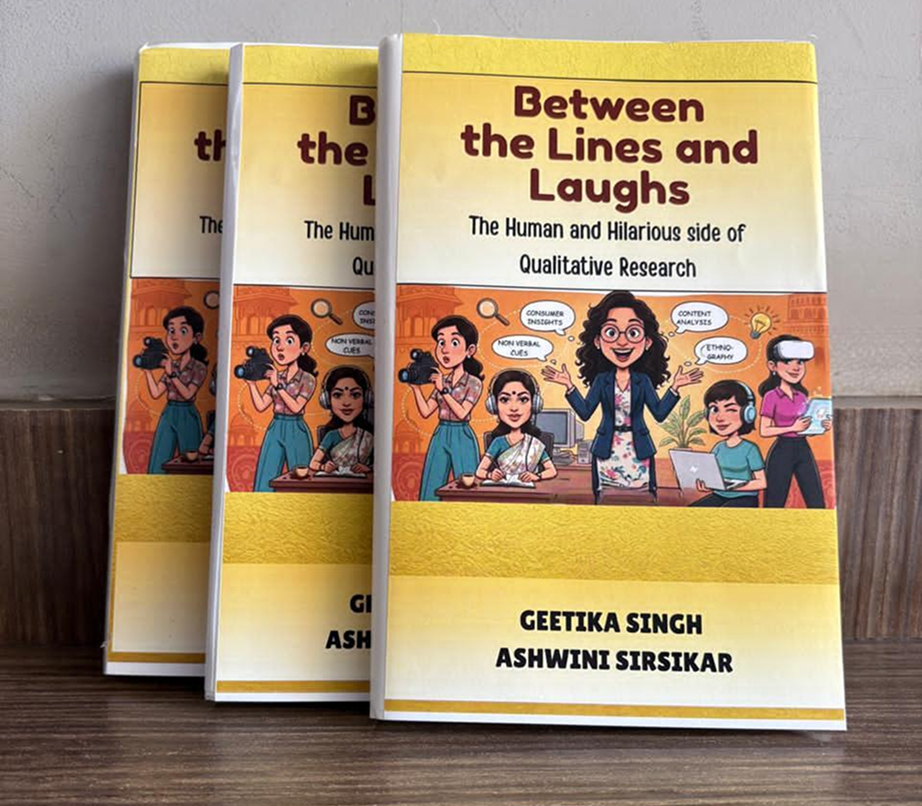
The thought of documenting them had been at the back of my mind for a while, though it remained just that, a thought. It needed a degree of intent to take shape. That came through my co-author, Geetika Singh, who pushed the idea from conversation to commitment. Once we began, the process was both organic and structured. We decided to focus on 5 different eras of qualitative research and bring them alive through context (India in that era), the role of qualitative research and technology, the challenges and high points and how we navigated the same. Much of what we wrote drew directly from lived experiences. These were incidents we had witnessed or been part of, which meant they did not require invention, only careful recall and articulation. The book took close to a year to come together, not because the material was difficult to generate, but because we were balancing it alongside our professional lives and taking the time to reflect on what each story represented.
The humour in the book is not an added layer. It is inherent to the practice of qualitative research. While the discipline often deals with serious questions, the field itself is unpredictable. Respondents interpret questions in their own way, situations unfold differently from what is planned, and researchers frequently find themselves navigating circumstances that are, at times, unintentionally comic.
From the outset, we were clear that the book was not meant to be a manual on qualitative research. We chose to step away from methods, tools and techniques, and instead bring the world of qualitative research alive through its experiences. The varied people one meets, the range of categories one works on, and the fact that no two days are alike are what define the profession. There was also a conscious effort to retain the humour, as we hoped to make the practice feel more aspirational, accessible and engaging for younger entrants.
Looking ahead, the experience of writing this book has made the idea of continuing more tangible. There is interest in exploring other themes, particularly those that sit at the intersection of culture and everyday behaviour. Whether this takes the form of another book or shorter pieces of writing is still open, but the intent to keep observing and documenting remains.
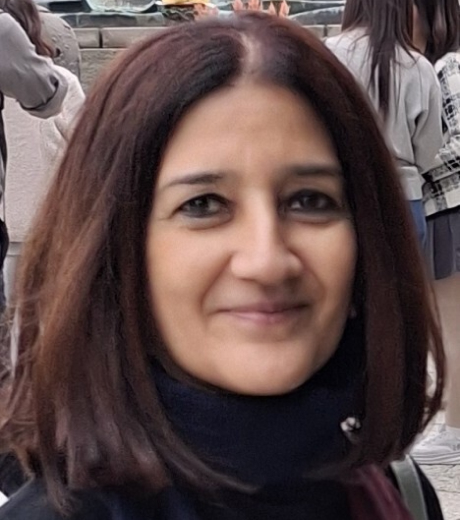
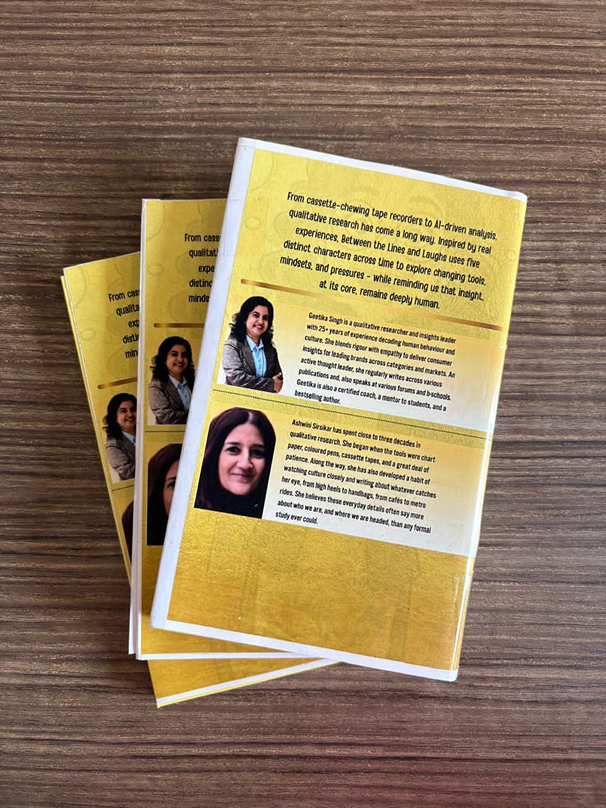
Ashwini Sirsikar has spent nearly three decades listening to people for a living and enjoying it far more than she ever expected. A qualitative researcher by training and instinct, she has worked across eras when insights were built with chart paper and cassettes, and later shaped with digital tools, social listening, and AI. Known among colleagues for her curiosity, candour, and respect for the craft, Ashwini believes that good research is as much about judgement and empathy as it is about method.
Alongside her research work, Ashwini is a keen observer of everyday life. Through her writing, she enjoys spotting small quirks; objects, habits, throwaway moments that quietly reveal larger cultural shifts. When she isn’t listening, eavesdropping, or thinking about people, Ashwini dabbles in art, occasionally loses herself in dance, and unapologetically binges on OTT shows often finding research insights there too.
Geetika is a seasoned qualitative researcher and insights leader with over 25 years of experience helping organisations decode human behaviour and cultural context. An MBA in marketing, she brings together qualitative methodologies, semiotics, and behavioural science to deliver insights that are both analytically rigorous and deeply human. She has worked across categories and markets, partnering with leading brands to inform strategy, innovation, and communication, and has presented her work at prominent market research and marketing forums globally. Known for her clarity of thinking and grounded leadership, Geetika is a speaker, mentor, and guest faculty at leading business schools, where she engages students and professionals on the evolving role of insights in decision-making.
Beyond her corporate work, Geetika is an active thought leader who writes on a wide range of topics and regularly shares her perspectives across publications. She is the bestselling author of Overcoming Challenges of Type 1 Diabetes and a certified life coach, passionate about supporting emerging leaders as they navigate complexity and change.